
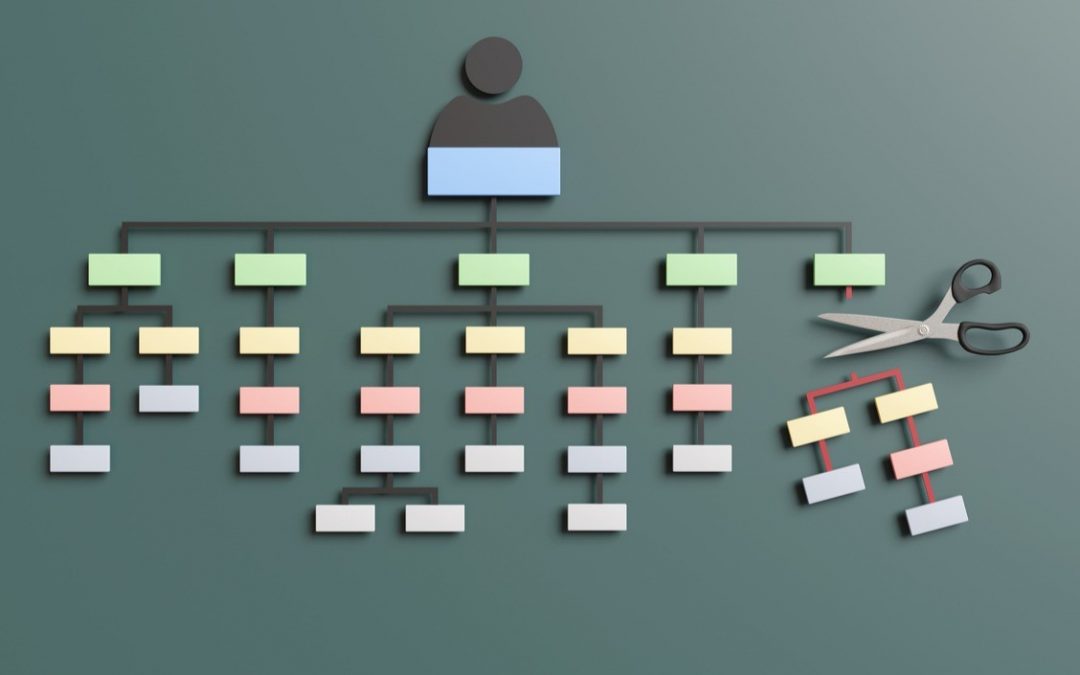
Yet the most effective cost lever often lies within the product
Current news is dominated by austerity programmes and announced job cuts. The economic pressure on industrial companies is real: weak demand, high uncertainty, rising costs, and persistent margin pressure. In this situation, many companies resort to what appears to be the quickest lever – reducing organisation and personnel.
This approach is understandable. However, in many cases, it falls short.
In manufacturing companies, the majority of costs arise not within the organisation, but within the product itself. Material usage, design decisions, specifications, product variety, and supply chain structures determine a large proportion of costs throughout the entire lifecycle. To sustainably reduce costs, this is precisely where action must be taken.
Why Redundancies Are Rarely the Best Answer
Personnel costs are visible and can be influenced in the short term. Product costs, however, are more complex, distributed across many functions and decisions. This is precisely why they often remain untouched in crisis situations – even though their leverage is significantly greater.
Product-related cost reductions are effective:
- permanently – with every unit manufactured and sold
- structurally – independent of economic cycles
- without loss of expertise in development, purchasing, or production
Cost Value Engineering addresses not symptoms, but the root causes of costs.
Cost Value Engineering also delivers short-term results – if the focus is right
Contrary to popular belief, Cost Value Engineering is not purely a long-term or development project. When applied correctly, measurable effects can be achieved in the existing portfolio within a short period.
A key lever is Should Costing. Many companies negotiate prices without knowing what a product should actually cost under realistic assumptions. Should Costing creates transparency regarding material, manufacturing, overheads, logistics, and margin. This transparency fundamentally changes supplier discussions – moving away from blanket demands towards fact-based discussions about cost structures and value contributions. Especially with existing volumes, this often leads to quickly realisable savings.
Critically questioning existing products – without new development
Another significant starting point lies in existing product design. Many costs have grown historically and are no longer aligned with real customer value. Oversizing, unnecessarily tight tolerances, or features without clear added value permanently drive up costs.
Cost Value Engineering consistently asks the question:
- Which function creates genuine customer value?
- Which costs do not contribute to this value?
The goal is not cheap construction, but a conscious balancing of value and costs – often with adjustments that can be implemented quickly and do not require complete redesign.
Complexity as a hidden cost driver
The impact of variants and complexity is particularly underestimated. Every additional variant not only increases material costs but also effort in purchasing, planning, logistics, quality, and production.
Cost Value Engineering reveals
- which variants actually create value
- and which primarily cause internal costs
Even limited rationalisation can have significant cost effects – without negatively impacting the market or customers.
Reducing costs in the product rather than the organisation
In addition to design and variants, material and supply chain decisions also offer effective short-term levers. Alternative materials, adjusted specifications, optimised batch sizes, or altered logistics and packaging concepts directly impact manufacturing costs. These measures not only reduce costs but often also increase supply chain transparency and resilience.
Conclusion: Sustainable cost reduction requires a focus on value
The current economic pressure demands decisive action. However, sustainable cost reduction does not arise from knee-jerk organisational cuts, but from systematic cost and value management.
Companies that consistently implement Cost Value Engineering now create short-term relief and long-term competitiveness simultaneously – without weakening their organisation.
Reducing costs is necessary. Securing value is crucial

