WindEnergy Hamburg 2026: Where Growth Meets Cost Pressure

WindEnergy Hamburg 2026: Where Growth Meets Cost Pressure

What Costineers observed at the world’s leading wind industry trade fair

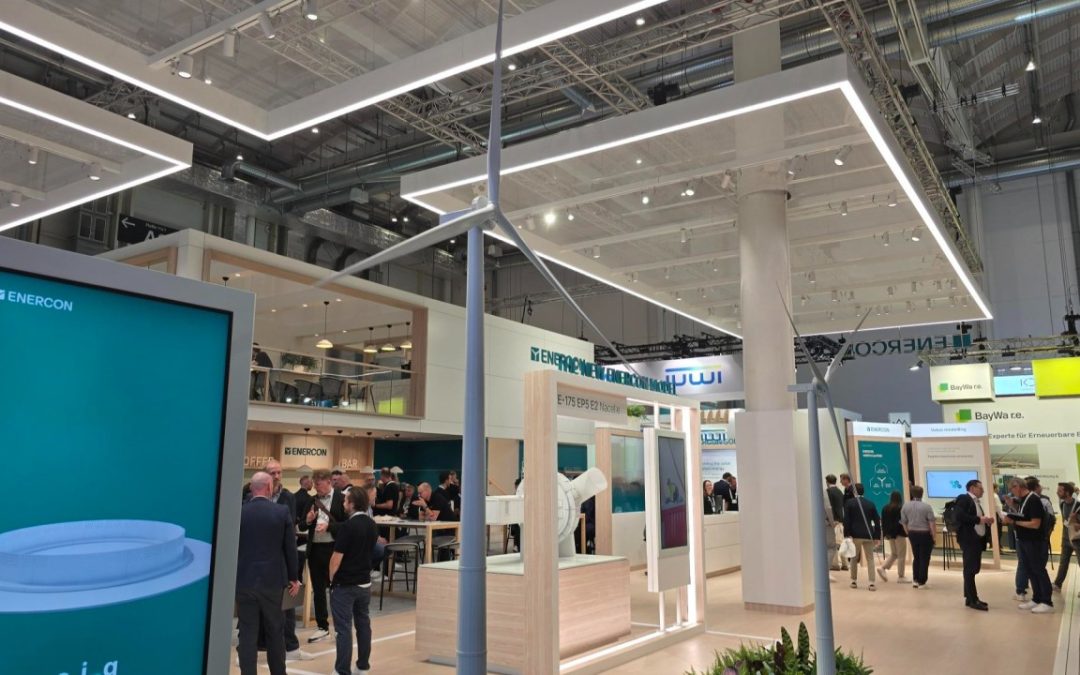
WindEnergy Hamburg has been the most important meeting point for the onshore and offshore wind industry for years. We were there on the opening day, and our visit clearly showed: the industry is growing again, but the question of costs has now taken centre stage.

More than 1,600 exhibitors from around 40 countries, over 300 speakers across six stages, 83,000 square metres of exhibition space, and up to 43,000 expected visitors from 100 nations: these figures alone highlight the fair’s significance. For us as Cost Engineers, however, one thing was particularly interesting: what was said between the lines of the opening speeches and within the halls.

The New Momentum: The Industry Is Delivering Again

After years of sluggish expansion, wind energy in Germany is regaining momentum. In 2025, 4.6 GW were newly installed onshore, approximately 75 per cent more than the previous year. Offshore, installed capacity has risen above 10 GW for the first time. Wind energy now covers more than a quarter of Germany’s gross electricity consumption.

The mood across Europe is also positive. WindEurope CEO Tinne Van der Straeten stated at the opening that Europe is on track to install 24 GW this year. She clearly placed wind energy in a geopolitical context: its expansion saves Europe 65 LNG tankers each year. “That is sovereignty.”

Ben Backwell from the Global Wind Energy Council echoed a similar sentiment. Countries, companies, and households increasingly view wind as the most reliable and cost-effective solution.

So, the demand is there. This is precisely where the question that concerns us at Costineers begins: At what cost will this growth be delivered?

Politics with a Price Tag: The Cost Side Takes Centre Stage

Stefan Rouenhoff, Parliamentary State Secretary at the Federal Ministry for Economic Affairs, opened the fair. He made it clear that the Federal Government is committed to renewable energies. However, he added that “the cost side must also be kept in mind.”

This statement is more than a side note. It marks a shift: it is no longer about whether wind power will be expanded, but what the expansion costs and who bears these costs. Discussions surrounding the EEG amendment, new rules for offshore tenders, and three key legislative proposals in the autumn show that the framework conditions are currently being redrawn. Rouenhoff emphasised that they absolutely want to “avoid any disruption to the expansion.”

Associations, including BWE President Bärbel Heidebroek and VDMA Power Systems, primarily called for one thing: planning certainty. This is understandable. From a cost perspective, however, it also means that those who wish to rely on dependable framework conditions must, in turn, be able to demonstrate that they produce efficiently.

New Competitors, New Price Benchmarks

It was impossible to overlook the confident presence of Chinese manufacturers in Hamburg. CRRC, for example, showcased a portfolio of more than 80 turbine models, from 1.5 MW onshore to 20 MW offshore. The company received TÜV SÜD type certification for a 7.15 MW turbine and highlighted over 20 of its own manufacturing sites worldwide.

Such appearances shift the benchmarks. European OEMs and their suppliers will increasingly have to compete on prices that originate from entirely different cost structures. The crucial question will no longer be “What does our product cost?” but “What should it cost, and why does it cost more from us?”

This is precisely where Should-Costing comes in. Anyone who can break down the costs of a nacelle, a gearbox, or a tower segment to material, process steps, and manufacturing time knows where the gap to the competition arises. And they know which part of that is structure-related and which is process-related.

From Order Book to Margin: The Real Test

Full order books do not automatically equate to healthy margins. Several major manufacturers have learned this painfully in recent years. The ramp-up now underway brings with it the classic challenges of industrialisation:

  • Capacities must be rapidly scaled up, often with new suppliers and in new regions.
  • Turbines are becoming ever larger, and each platform generation introduces new components, tools, and processes.
  • Product variety is growing with site, grid, and certification requirements.
  • Supply chains for steel, copper, rare earths, cables, and large components remain vulnerable to price and availability fluctuations.


The question shifts from “Can we deliver?” to “Can we deliver profitably?”. For many companies in the value chain, from OEMs to Tier 2 suppliers, this will be the real test in the coming years.

Storage and System: New Interfaces, New Cost Drivers

For the first time this year, there was a dedicated Energy Storage exhibition spanning 3,600 square metres. This is a clear signal: wind energy is increasingly being conceived as part of an overall system of generation, storage, and grid.

For the industry, this also means new interfaces are emerging, and with them, new cost questions. Those offering hybrid parks, battery storage, or grid-serving functions must understand system costs, not just component costs. Simultaneously, demands on power electronics, control, and integration are increasing. This creates markets, but also cost traps if complexity is not managed from the outset.

Discussions at the Fair: Between Optimism and the Calculator

In our conversations in the halls, similar themes repeatedly arose: How do we respond to price pressure from Asia without sacrificing quality? How do we keep costs under control with increasingly larger turbines and more variants? And how do we secure supply chains without burdening the cost base? For many, Cost Value Engineering has not yet been adopted – yet this very method helps unlock potential.

It was striking: optimism has returned. At the same time, everyone is aware that the next growth phase will unfold differently from the last. It will be decided more by efficiency than by volume.

Conclusion: The Next Phase Belongs to Cost Competence

WindEnergy Hamburg 2026 demonstrated that the wind industry once again has tailwinds, politically, economically, and geopolitically. However, this also increases expectations: for affordable electricity, efficient tenders, and competitive products “Made in Europe”.

The companies that will succeed are those that know their cost structure in detail, actively manage complexity, and implement savings sustainably, rather than just presenting them on slides.

For Costineers , WindEnergy Hamburg was therefore far more than an industry trade fair. It highlighted the challenges the wind industry faces in the coming years and the questions manufacturers and suppliers must now answer to also benefit economically from growth.
ILA 2026: When Innovation Meets Industrialisation – Costineers’ Observations from the Aerospace Trade Fair

ILA 2026: When Innovation Meets Industrialisation – Costineers’ Observations from the Aerospace Trade Fair

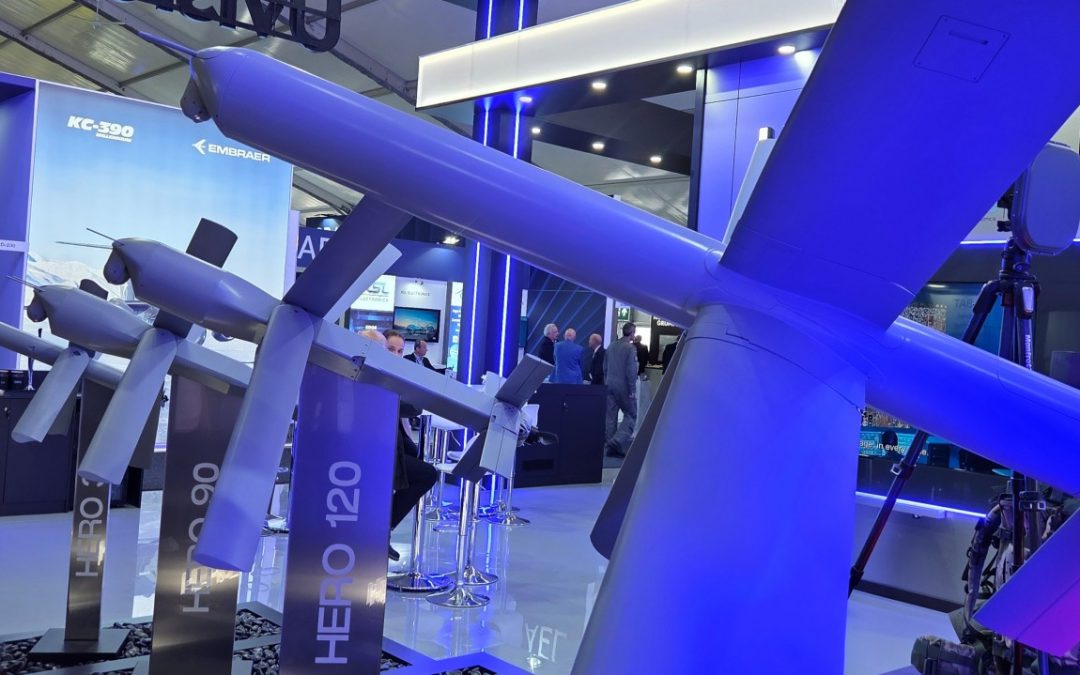
ILA Berlin has always been a showcase for aerospace technology. However, this year’s visit to the trade fair clearly demonstrated that the industry is undergoing a fundamental transformation.

While civilian applications remained present, one topic in particular dominated the halls and outdoor areas: defence technology. New threat landscapes, rising defence budgets, and geopolitical uncertainties have led to military systems currently driving a significant portion of the innovation momentum.

For Costineers, ILA offered far more than a traditional product show. It was a glimpse into the future of an industry that increasingly has to grapple with the same questions many other sectors have faced before:

How can increasing production volumes be managed? How can innovative technologies be produced economically? And how can costs be controlled without compromising system performance?

The New Dynamic: Defence as an Innovation Driver

Anyone who visited ILA a few years ago would hardly have expected the current developments. While military applications were always part of the exhibition, they rarely took such a central stage.

From unmanned systems to sensor technology, communication technologies, and autonomous platforms, right through to new air defence solutions – the pace of innovation is enormous.

Particularly striking was the high number of young companies and start-ups presenting new technologies. Many of these firms bring fresh ideas, agile development processes, and a strong software focus to a traditionally more conservative industry. The innovative power is impressive. Yet, at the same time, a challenge emerges that often only becomes visible in the next development phase.

From Prototype to Series Production: The Real Acid Test

Many of the systems showcased are still in early growth phases. Technical feasibility has often already been proven. However, the crucial question is:

Can the solution also be produced economically in larger quantities?

This is precisely where the classic challenges of Cost Engineering begin:

  • Scalable product architectures
  • Manageable manufacturing processes
  • Standardisation of components
  • Supply chain stability
  • Make-or-buy decisions
  • Variant management
  • Cost optimisation without performance loss


What works in prototype construction can quickly lead to significant cost problems in series production. Many start-ups therefore face the same development that almost every successful technology industry has gone through: an innovation lead alone is not enough. In the long term, industrial feasibility and economic scalability determine success.

Start-ups as Future Cost Engineering Candidates

The young defence technology scene, in particular, is likely to be increasingly confronted in the coming years with issues that are already part of the daily routine for established OEMs.

Typical questions will include:

  • Which components cause disproportionate costs?
  • Where do unnecessary complexities arise?
  • Which functions genuinely create customer value?
  • Which assemblies can be standardised?
  • Which manufacturing steps can be automated?
  • Where can existing market standards be utilised?


Many of the innovations showcased today will in future require precisely the cost-down programmes that have been established in other industries for decades.

Trade Fair Audits as an Early Warning System for Market Changes

For Costineers, the particular value of visiting a trade fair lies not solely in the products exhibited. Far more important is the opportunity to identify technological developments, market trends, and future challenges at an early stage.

At ILA, it became clearly visible that:

  • Defence technologies are gaining massive importance.
  • New market players are entering the competition.
  • Software and autonomous systems are becoming increasingly crucial.
  • Scaling and industrialisation are coming into sharper focus.
  • Cost optimisation will also become a strategic success factor for young technology companies in the future.


It is precisely this combination of innovation and future cost pressure that makes the industry particularly exciting from a Cost Engineering perspective.

Discussions at the Exhibition Stand: Between Euphoria and Reality

Discussions with exhibitors also confirmed many of these observations. The sense of optimism is palpable. New programmes are emerging, investments are flowing, and technological developments are accelerating.

At the same time, there is growing recognition that the real challenge often lies not in development, but in successful industrialisation. Because with increasing production volumes, the demands on procurement, supplier management, manufacturing, and cost control also grow.

The question shifts from “Can we develop this?” to “Can we produce this economically?”.

Conclusion: The Next Phase Belongs to Industrialisation

ILA impressively demonstrated how much the aerospace industry is currently changing. Particularly in the defence sector, numerous innovative solutions and new market players are emerging. However, the innovation phase is inevitably followed by the industrialisation phase.

It is precisely there that topics such as Cost Engineering, Value Engineering, standardisation, and scalability become decisive competitive factors.

For Costineers, ILA was therefore far more than a technology exhibition. It was a look at the challenges of tomorrow – and at the questions many companies will have to answer in the coming years if innovative ideas are to become economically successful products.

Redundancies Dominate the Headlines

Redundancies Dominate the Headlines

Yet the most effective cost lever often lies within the product

Current news is dominated by austerity programmes and announced job cuts. The economic pressure on industrial companies is real: weak demand, high uncertainty, rising costs, and persistent margin pressure. In this situation, many companies resort to what appears to be the quickest lever – reducing organisation and personnel.

This approach is understandable. However, in many cases, it falls short.

In manufacturing companies, the majority of costs arise not within the organisation, but within the product itself. Material usage, design decisions, specifications, product variety, and supply chain structures determine a large proportion of costs throughout the entire lifecycle. To sustainably reduce costs, this is precisely where action must be taken.


Why Redundancies Are Rarely the Best Answer

Personnel costs are visible and can be influenced in the short term. Product costs, however, are more complex, distributed across many functions and decisions. This is precisely why they often remain untouched in crisis situations – even though their leverage is significantly greater.

Product-related cost reductions are effective:

  • permanently – with every unit manufactured and sold
  • structurally – independent of economic cycles
  • without loss of expertise in development, purchasing, or production


Cost Value Engineering addresses not symptoms, but the root causes of costs.


Cost Value Engineering also delivers short-term results – if the focus is right

Contrary to popular belief, Cost Value Engineering is not purely a long-term or development project. When applied correctly, measurable effects can be achieved in the existing portfolio within a short period.

A key lever is Should Costing. Many companies negotiate prices without knowing what a product should actually cost under realistic assumptions. Should Costing creates transparency regarding material, manufacturing, overheads, logistics, and margin. This transparency fundamentally changes supplier discussions – moving away from blanket demands towards fact-based discussions about cost structures and value contributions. Especially with existing volumes, this often leads to quickly realisable savings.


Critically questioning existing products – without new development

Another significant starting point lies in existing product design. Many costs have grown historically and are no longer aligned with real customer value. Oversizing, unnecessarily tight tolerances, or features without clear added value permanently drive up costs.

Cost Value Engineering consistently asks the question:

  • Which function creates genuine customer value?
  • Which costs do not contribute to this value?

The goal is not cheap construction, but a conscious balancing of value and costs – often with adjustments that can be implemented quickly and do not require complete redesign.


Complexity as a hidden cost driver

The impact of variants and complexity is particularly underestimated. Every additional variant not only increases material costs but also effort in purchasing, planning, logistics, quality, and production.

Cost Value Engineering reveals

  • which variants actually create value
  • and which primarily cause internal costs


Even limited rationalisation can have significant cost effects – without negatively impacting the market or customers.


Reducing costs in the product rather than the organisation

In addition to design and variants, material and supply chain decisions also offer effective short-term levers. Alternative materials, adjusted specifications, optimised batch sizes, or altered logistics and packaging concepts directly impact manufacturing costs. These measures not only reduce costs but often also increase supply chain transparency and resilience.


Conclusion: Sustainable cost reduction requires a focus on value

The current economic pressure demands decisive action. However, sustainable cost reduction does not arise from knee-jerk organisational cuts, but from systematic cost and value management.

Companies that consistently implement Cost Value Engineering now create short-term relief and long-term competitiveness simultaneously – without weakening their organisation.

Reducing costs is necessary. Securing value is crucial

Trade fair audit at AGRITECHNICA: Benchmarking where the industry shows its face

Trade fair audit at AGRITECHNICA: Benchmarking where the industry shows its face

AGRITECHNICA is not just a leading international trade fair for agricultural machinery – it is a real-world market mirror in XXL. For Costineers, it was therefore the ideal location to conduct a comprehensive trade fair audit. Hardly any other context offers such a dense, direct and undistorted representation of what the market is currently achieving. Machines and vehicles are displayed side by side and are openly accessible. You can see how competitors think, design, simplify or even use over-engineered solutions. This transparency opens up enormous opportunities – especially when it comes to benchmarking, product optimisation and cost savings, but also quite simply which additional functions competitors are offering customers… even if it is just a fancy cup holder at mouth level.

The trade fair as an ‘open-air laboratory’: Competition in a confined space

Normally, a product must first be purchased or procured before it can be analysed in detail (classic tear-down workshop as part of a cost value engineering project). At a trade fair like AGRITECHNICA, this does not apply. Entire vehicle ranges – from the base model to the high-end machine – are positioned in the immediate vicinity.

For us as an ‘audit team’, this means:

  • Direct 1:1 comparison of all relevant competitor products
  • Visibility of design solutions without disassembly
  • Identification of functional strengths and weaknesses of individual OEMs
  • Identification of trends, system architectures and platform strategies
  • Observation of variant concepts and functional scopes


This simultaneous comparison is extremely valuable because it creates an analytical sharpness that is often lacking in everyday project work. You can see at a glance how differently identical technical requirements are implemented – and what impact this likely has on costs, manufacturing effort and serviceability.


Identifying potential before the vehicle has even been in a tear-down workshop

A frequently underestimated point: Many cost reduction approaches do not first arise when a vehicle is dismantled – but much earlier.

At the trade fair, you can already identify:

  • Unnecessarily complex solutions from other manufacturers
  • Or conversely: smartly simplified system approaches that could make your own product leaner
  • Alternative fastening concepts
  • Routing that drastically reduces service costs
  • Material substitutions and new material trends
  • Components that could potentially be purchased instead of being produced in-house at great expense


This initial ‘spark of an idea’ is particularly valuable. Even before an OEM spends budget on a full tear-down, Costineers can provide concrete indications of where potential lies – and which manufacturers should be given special attention.

The advantage: Overview before detail – and thus a very efficient start to a subsequent cost value engineering project.


Systematic benchmarking methodology: Structure instead of a stroll

A trade fair audit is not a random wander, but follows a clear process. At Costineers, this typically includes:

  1. Definition of target systems Which assemblies, functions or variants should be specifically observed?
  2. Structured recording format Photos, technical observations, sketches, measuring points, comparison criteria.
  3. Comparison across multiple manufacturers Evaluation according to criteria such as manufacturing simplification, component standardisation, degree of innovation or variant logic.
  4. Hypothesis formation on cost influences Where could this solution be cheaper? Where more expensive? Where might there be a strategic decision behind it?
  5. Documentation in evaluation folders Clearly structured – for later deep-dive analyses or workshops.


This creates an objective, reliable picture of the market – usable for engineering, purchasing, product management and management decisions.


On-site discussions: The underestimated treasure trove of information

Another advantage of the trade fair audit lies beyond the vehicles: discussions with sales, product managers and stand personnel.

Many underestimate how openly contacts speak at trade fairs – especially when the conversation takes place on an equal footing.

Typical information you receive:

  • Background to new model generations
  • Vertical integration and make-or-buy strategies
  • Challenges in production and quality
  • Reasons for specific technical designs
  • Information on suppliers, system partners or development cooperations
  • Information on planned specification streamlining or series simplifications
  • Market trends, price ranges and positioning strategies


These insights link visible technology with invisible decision-making logic. This creates a much more complete picture than a purely static product scan could ever provide.


Why trade fair audits are a strategic instrument – not just a technical gimmick

For Costineers, trade fair audits are not just a technical tool, but a strategic building block to:

  • identify project priorities at an early stage
  • recognise cost-down potential
  • systematically understand alternative approaches of other OEMs
  • spot innovation focal points
  • align engineering and purchasing more purposefully
  • plan tear-down strategies more specifically


In addition, they provide a compact, extremely market-oriented picture – exactly what many decision-makers need before far-reaching cost engineering or product decisions are made.


Conclusion: Trade fair audits create clarity, inspiration and cost advantages

The trade fair audit at AGRITECHNICA clearly demonstrated the value of such an approach: It offers rapid transparency, well-founded comparisons and provides initial concrete optimisation impulses, long before a tool is even touched or a vehicle is dismantled.

For companies that want to reduce costs, improve products or better understand the market, a trade fair audit is therefore a highly efficient and often underestimated instrument.

Costineers consistently uses this opportunity – and shows that the first step towards successful cost savings already begins at the exhibition stand.

From cost project to living system

From cost project to living system

We Germans love thoroughness. In hardly any other country are things calculated, checked, and documented as meticulously – especially when it comes to costs. Yet it is precisely there that a familiar pattern emerges: you start ambitiously, invest time and expertise, create complex calculations – and then put them in a drawer.

The phenomenon has a name: Should Costing. Originally intended as a strategic instrument for cost management, in many companies it remains a static project, a one-off effort with no follow-up. The result: after a few months, the effort is forgotten, the data is outdated, and the insights have evaporated. And the most important question remains unanswered: How can you keep Should Costs alive – current, relevant, and effective?


The misconception of the one-off task

Many organisations treat Should Costing like a special assignment: a project with a start, a goal, and a final report. But cost structures are not a snapshot. They change daily – with raw material prices, supply chains, exchange rates, and production locations.

What is a precise calculation today can be a distorted reflection tomorrow. Paradoxically, the effort required to create such analyses then leads to them remaining unused. Too tedious, too expensive, too rarely updated. The result is stagnation in the “COMPLETED PROJECTS” directory.

Yet the actual value of Should Costing lies not in the calculation itself, but in its reuse. Cost transparency only unfolds its impact when it is regularly renewed.


From model to management tool

The solution is not to make Should Costing even more detailed or complex. It is to make it more dynamic. What is needed is the step from project to process – from a static model to a living system.

Dynamic Should Costing is the name of this approach: a system that updates itself, fed by market intelligence, indices, and supplier data. A system that doesn’t gather dust in the archive but moves with reality.

The principle is simple but effective:

  • Build: A solid foundation – cost structure, data model, roles, processes.
  • Monitor: Continuous observation of market and material trends.
  • Refresh: Regular, automated data updates.
  • Apply: Active use as a basis for decision-making in procurement, engineering, and management.


In this way, Should Costing does not become a finished set of figures, but a cycle – a learning instrument that beats to the rhythm of the market.


The human factor: behaviour instead of computing power

Technically, this is all feasible. The real challenge, as so often, lies in behaviour. The hurdle is not a lack of data, but a lack of movement. Many companies remain stuck in the logic: “We’ll do it right once – and then it’ll be fine.”

But markets are dynamic. Aluminium prices, energy, wages – they change weekly. Anyone who only analyses cost structures once will soon be working with historical material.

Current cost truth arises from mindset, not software. It arises when teams are willing to treat data as a living asset – not as an archived report. When procurement and engineering take joint responsibility for keeping things up to date. When you accept that perfection is not a state, but a process.


Scaling through simplicity

The path to sustainable cost transparency does not begin with large platform projects, but with small routines: regular data refreshes instead of full analyses. Automated market feeds instead of manual updates. Dashboards instead of PDF folders.

Together with our partner Valuemize, raw material indices, benchmarks, and supplier insights can be integrated automatically – ensuring calculations stay current without the need for new analyses every week.

The goal is relief, not overload: Should Costing thus becomes a compass for decision-makers, not a burden for specialist departments.


Why all this?

Because outdated cost models are dangerous. They simulate stability where something has long since shifted. And they weaken the negotiating position against suppliers who have long since adjusted their prices.

On the other hand, those who work with dynamic, data-driven models negotiate based on facts. They recognise trends before they become a cost wave. They can differentiate between price and cost – and see where margin, material, and manufacturing really stand.

This is the real strength of Should Costing: not control, but insight.


From Excel project to company routine

Many ask: do you need special tools for this? The answer is: no – but you need consistency.

Costineers works tool-agnostically: whether in Excel, Siemens TcPCM, Tset, or Facton – the tool is not what matters, but the mindset. Cost methodology is not a software issue, but a leadership tool. The crucial thing is that the results are understandable, useful, and accessible – for everyone who works with them.

Because only what is understood and used changes behaviour.


What remains

Should Costing is not a calculation exercise, but a cultural issue. Those who know their costs shape their market. Those who only calculate them once lose touch.

Dynamic Should Costing is therefore more than a method – it is a mindset: current instead of static, applicable instead of archived, effective instead of perfect.

And that is exactly the core of cost competence in the 21st century: it is not the most beautiful calculation that wins, but the most living one.


Conclusion: In a world of dynamic markets, living cost models are needed. Companies that understand their Should Costs as a learning system make better decisions, negotiate on an equal footing, and use resources more efficiently.

The path there is not a major project, but a habit – maintained through regularity, supported by mindset, and backed by data.

Or put more simply: From calculation to tool. This is how Should Costing becomes what it should be – a real value driver.